
Labor Day is the last long weekend before football takes over every Saturday and the smoker starts collecting leaves. That makes it the one cook of the year worth planning like a pro — not because it has to be fancy, but because you want to be standing with your people instead of chained to the grill.
Here's how the crew at BBQ Pro Shop runs a Labor Day cookout that stays relaxed from the first bag of charcoal to the last rib bone.
1. Build the menu backward from your grate space
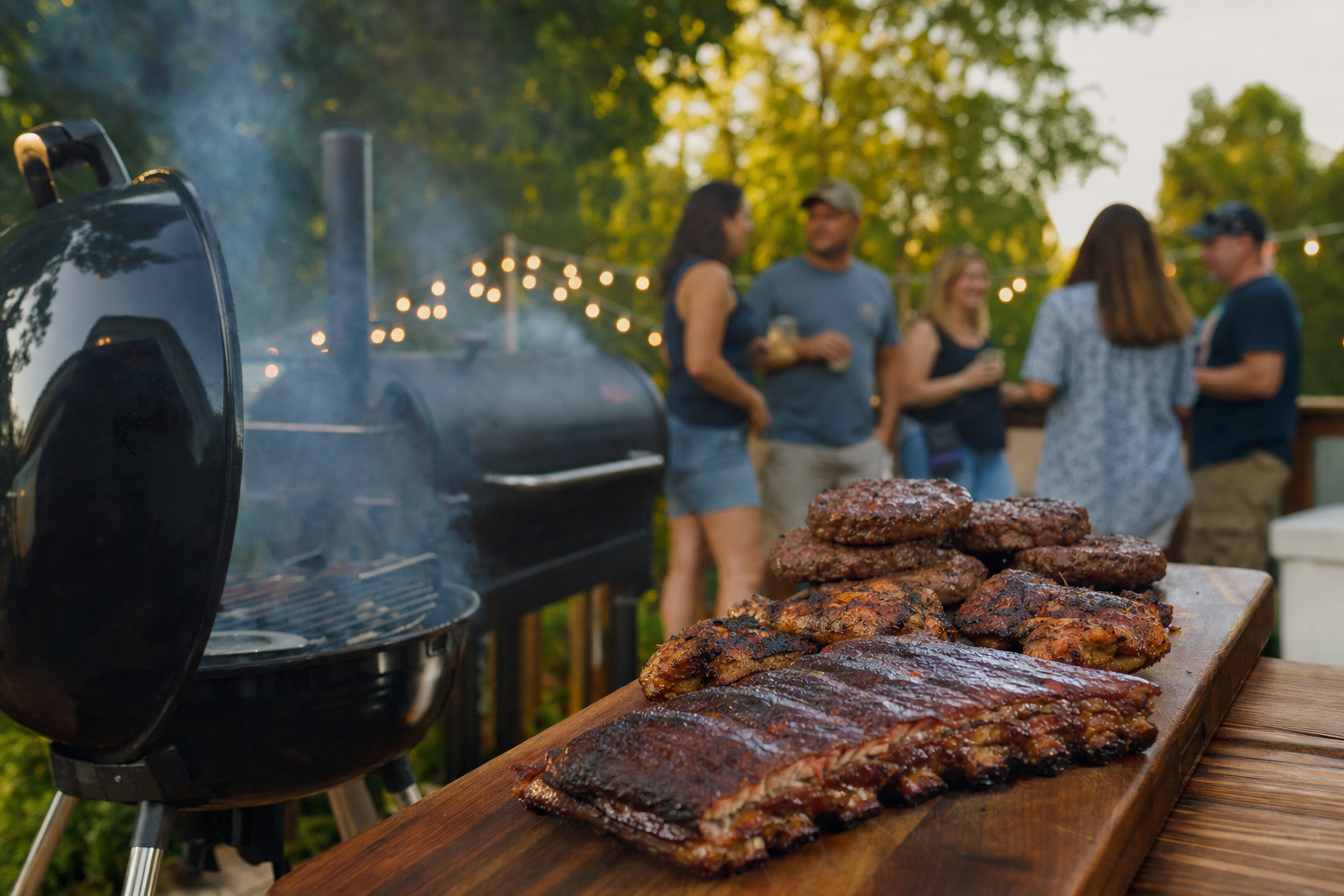
Most cookouts go sideways for one reason: too many things needed the grill at the same time. Before you buy a single pound of meat, count your cooking surface and pick one long cook, one fast cook, and one side that never touches the fire.
One long cook — ribs, pork butt, or a whole chicken. This is your centerpiece and it goes on early.
One fast cook — burgers, brats, hot dogs, or chicken thighs, cooked to order as people arrive.
One no-fire side — slaw, potato salad, baked beans finished indoors, or a cold pasta salad.
Plan on roughly ½ pound of cooked meat per adult and a little less for kids, then add a 20% buffer. Nobody has ever complained about leftovers on Tuesday.
2. Season the day before, not the day of
Rubs need time. Salt in a rub pulls moisture to the surface, dissolves, and works back into the meat — that's what gives you seasoning all the way through instead of just a crust.
Ribs, pork butt, brisket: rub 8–24 hours ahead, uncovered in the fridge on a rack.
Chicken: 4–12 hours ahead. Skin dries out and crisps better.
Burgers and steaks: season right before they hit the grate so the surface stays dry enough to sear.
A light coat of mustard, mayo, or oil as a binder helps the rub stick without changing the flavor. If you're running more than one protein, use a different rub on each — a sweet rub on ribs, a savory all-purpose or SPG on chicken and beef. It makes a three-item spread taste like a six-item spread.
3. Set a two-zone fire and stop fighting flare-ups
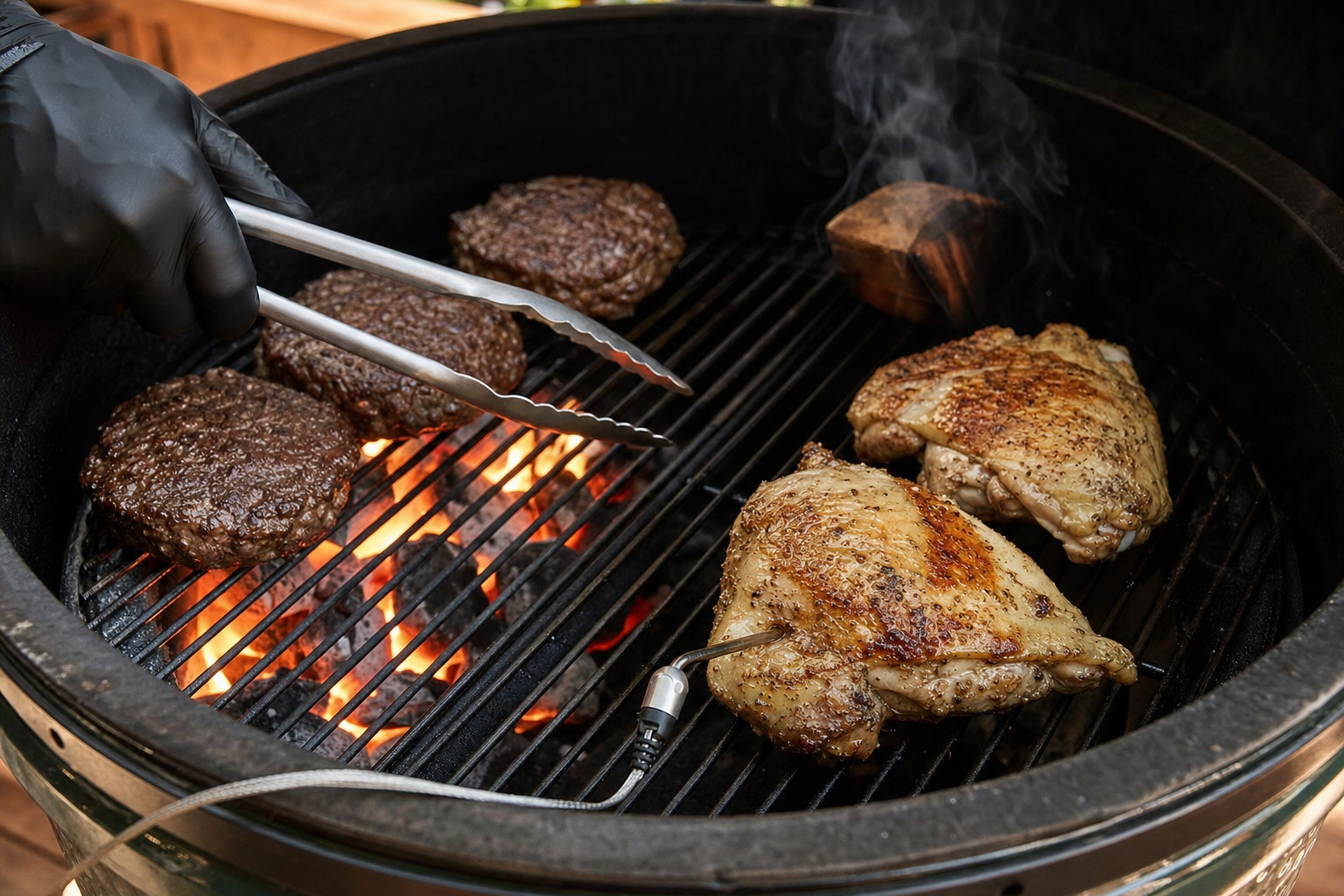
This is the single biggest upgrade to a backyard cook. Bank all your lit charcoal on one half of the grill and leave the other half empty. Now you have a hot side for searing and a cool side for cooking through — and an escape hatch when fat starts dripping and flames jump.
Charcoal: dump the chimney to one side. Add a single wood chunk if you want smoke flavor without running the smoker.
Gas: two burners on high, the rest off. Same principle.
Target temps: roughly 225–275°F on the cool side for ribs and chicken, 450°F+ over the coals for the sear.
Anything with sugar in the rub or sauce lives on the cool side until the last few minutes. Sugar burns fast, and burnt sugar tastes like burnt sugar no matter how good the rub is.
4. Sauce late, and sauce warm
Barbecue sauce is a finish, not a marinade. Brush it on during the last 10–15 minutes of the cook so it tacks up into a glaze instead of scorching. Warm the bottle in a pot of hot water first — cold sauce on hot meat drops the surface temperature and turns the bark soft.
Put out two or three sauces on the table and let people choose. A sweet-and-smoky, a vinegar or mustard-forward, and something with heat covers almost every guest you'll have.
5. Cook to temperature, never to the clock
Recipes give times. Meat gives temperatures. An instant-read thermometer is the cheapest insurance at any cookout.
Rest everything. Ribs 10–15 minutes, chicken 5–10, pulled pork 30–60 minutes wrapped in a dry cooler. Resting is when juice redistributes — slicing early dumps it on the board.
6. Set up a real prep station before anyone shows up
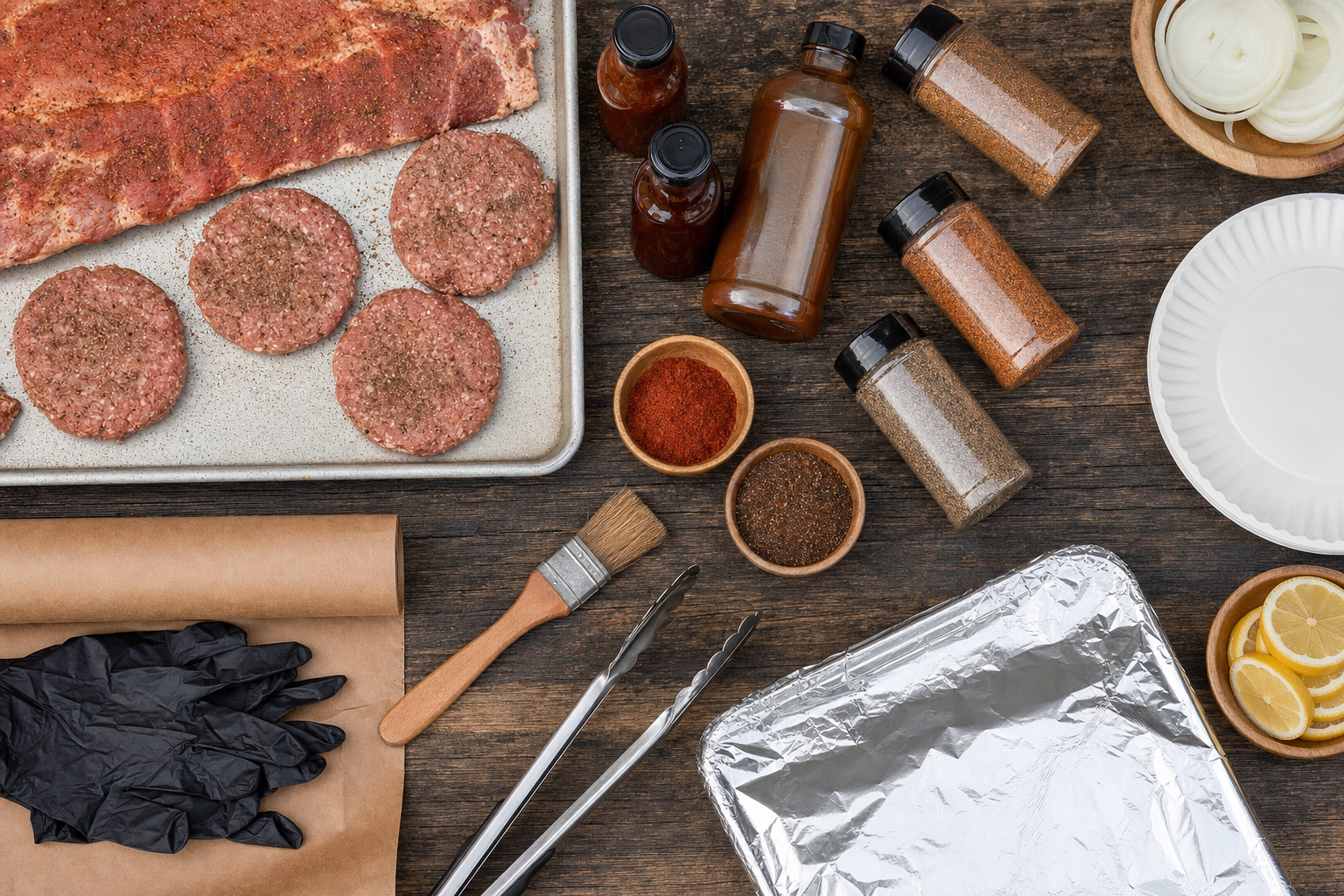
Mise en place isn't a restaurant thing, it's a "don't walk into the kitchen twelve times" thing. Lay out everything you'll need within arm's reach of the grill:
Long-handled tongs and spatula, plus a second clean set for cooked food
Nitrile gloves and cotton liners for handling hot meat and racks
Instant-read thermometer and a leave-in probe for the long cook
Foil, butcher paper, and a half-size foil pan for wrapping and holding
Sauce mop or brush, and a spray bottle of apple juice or water
Grill brush and a heat-safe bucket for used coals
Trash bag, paper towels, and a landing tray — the three things everyone forgets
7. Run the timeline, not the fire
A cookout feels effortless when the host has a plan on paper. Here's a template built around a 4:00 PM dinner:
Working backward from serving time is what separates a hosted cookout from a hopeful one.
8. Don't skip fuel, ice, and shade
The unglamorous stuff ruins more cookouts than technique does.
Fuel: buy 1.5× the charcoal you think you need, or check your propane with a hot-water pour test. Running out mid-cook is the worst feeling in barbecue.
Ice: two bags minimum — one for drinks, one for holding and for cooling anything down fast.
Shade and seating: early September sun is still real. A pop-up canopy and a few extra chairs earn their keep.
Bugs and lighting: citronella or a fan near the food, and string lights or a headlamp for cleanup after dark.
9. Give people something to do
The best cookouts have a table people gravitate to. Set out a sauce-tasting flight with a few squeeze cups and let guests rank them. Put out a bowl of rub and some warm bread. Have the game on and cornhole in the yard. Guests who feel useful stay longer and eat more.
10. Close out the season the right way
When the plates are cleared, do three things while the grill is still warm: scrape the grates, wipe down the exterior, and empty the ash. Then take inventory — what rubs are down to the last shake, which sauce disappeared first, whether your gloves and thermometer made it through the summer.
That list is your fall restock. Football season, chili weather, and Thanksgiving turkey are all closer than they look.
Everything you need for the last cook of summer is at BBQ Pro Shop — rubs, sauces, gloves, thermometers, wood, and accessories from the pitmaster brands we actually cook with. Free shipping on orders $99+.