
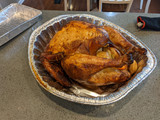
A memorable Thanksgiving turkey needs flavor in two places: inside the meat and across the skin. A turkey injection carries seasoned liquid into the breast, thighs, and drumsticks, while a poultry rub builds the aroma, color, and flavor guests taste first.
The best combination depends on the turkey you bought and the meal you want to serve. For a classic holiday turkey, pair a buttery poultry injection with an herb-forward rub. For a smoked turkey, use a savory injection with a rub containing paprika, garlic, and herbs. For Cajun flavor, choose a Cajun injection and use a compatible seasoning with a lighter hand.
The short answer: what rub and injection should you use?
These are flavor pairings, not instructions to use full-strength amounts of both products. Injections and rubs can both contain salt, so read both labels and season the exterior more lightly when the injection is salty.
Before seasoning, read the turkey label
Look for words such as “self-basting,” “marinated,” “enhanced,” “contains a solution,” or “for flavoring.” Those terms indicate that a solution may already have been added during processing, according to USDA poultry guidance.
That does not make the turkey inferior, but it changes the seasoning plan:
- Natural or unenhanced turkey: A good candidate for injection, brine, or dry brine, followed by a compatible rub.
- Pre-brined, self-basting, or solution-enhanced turkey: Skip another full brine. Before using a salty injection, check the injection manufacturer’s directions and the turkey’s sodium information; use a low-salt exterior seasoning or a lighter coating.
- Kosher turkey: It has already been salted as part of processing, so avoid automatically adding another strong brine or heavy salt layer.
- Frozen turkey: Thaw it completely before injecting or smoking. USDA recommends allowing about 24 hours of refrigerator thawing for every 4 to 5 pounds; a 12-to-16-pound turkey generally requires 3 to 4 days in a refrigerator at 40°F or below (USDA).
The most common flavor mistake is stacking a salty brine, salty injection, and salty rub without accounting for the seasoning already inside the turkey. Choose a moisture-and-flavor strategy deliberately instead of using every technique at full strength.
What does a turkey injection do?
A turkey injection places a thin, seasoned liquid directly inside the meat. It is especially useful in the thick breast, where an exterior rub cannot provide deep seasoning.
Injection is not a substitute for correct cooking. It can add flavor and moisture-retention ingredients, but the turkey still needs to be cooked to a safe temperature without overshooting doneness. Keep the turkey refrigerated while it marinates, and discard injection liquid that has contacted raw poultry; USDA says poultry can be refrigerated in a marinade for up to two days (USDA).
How to inject a turkey evenly
- Mix the injection exactly as directed. Different powders have different salt, phosphate, and flavor concentrations. Do not substitute a generic scoop ratio.
- Keep the mixture smooth. Whisk thoroughly and strain it if particles could clog the needle.
- Work over a rimmed pan. Injection can escape through the skin or another needle opening.
- Use fewer entry holes with several directions. Insert the needle into the thickest breast meat and slowly withdraw it while pressing the plunger. From the same opening, redirect the needle to distribute smaller amounts through nearby areas.
- Inject both breast halves, thighs, and drumsticks. Avoid forcing liquid into the cavity or directly against bone.
- Stop before the meat balloons or liquid gushes out. Even distribution is more useful than overfilling one location.
- Refrigerate after injecting. Keep the turkey cold until it is time to cook.
Wash the injector immediately after use, including inside the barrel and needle. Raw poultry juices can remain in small components.
Best turkey injections for Thanksgiving
Butcher BBQ Original Bird Booster
Butcher BBQ Original Bird Booster is the straightforward choice for a classic buttery turkey. The published flavor description centers on chicken base and butter, and the listed ingredients include sodium phosphate, Butter Buds, black pepper, and chicken base (BBQ Pro Shop).
The product directions call for mixing 1/4 cup of Bird Booster with 2 cups of water, which the page says treats 10 pounds of meat. Follow the current package directions when scaling for a larger turkey rather than guessing at the concentration (BBQ Pro Shop).
Pair it with: Coastal Goods Turkey Time for classic herbs, Duce’s Wild Poultry Rub for smoked-poultry flavor, or Gold Star Chicken Rub for savory herbs and hickory smoke.
LC BBQ Fowl Play
LC BBQ Fowl Play combines spices and phosphates for poultry flavor and moisture retention. Its ingredient list includes honey powder, sugar, salt, chicken base, spices, garlic, brown sugar, MSG, and onion (BBQ Pro Shop).
LC BBQ’s published directions call for 3/4 cup of Fowl Play with 2.5 cups of liquid, with the liquid adjusted to the desired strength (BBQ Pro Shop). Because the blend already contains salt and multiple flavor enhancers, apply the exterior rub thoughtfully.
Pair it with: Duce’s Wild Poultry Rub for smoked turkey or a restrained coating of Turkey Time for a more herb-forward holiday bird.
LC BBQ Bayou Blend
Choose LC BBQ Bayou Blend when you want a Cajun Thanksgiving turkey. It is formulated for poultry and pork with Cajun spices, honey powder, chicken base, garlic, onion, paprika, and savory flavor ingredients (BBQ Pro Shop).
LC BBQ recommends mixing 3/4 cup of Bayou Blend with 2.5 cups of water or chicken broth, adjusting the liquid for strength. The product page specifically identifies turkey as a suitable application and recommends a 14- or 16-gauge injector needle (BBQ Pro Shop).
Pair it with: A Cajun poultry rub applied lightly enough that the injection remains the main flavor. Avoid adding a sweet glaze too early, because sugar can darken before the turkey is done.
Other Bird Booster flavor options
Butcher BBQ also offers poultry injections in profiles such as honey, chipotle, and rotisserie. BBQ Pro Shop’s Thanksgiving guide identifies Original, Honey, and Chipotle Bird Booster among its injection options (BBQ Pro Shop Thanksgiving guide).
Choose the injection before choosing the exterior rub:
- Honey: Pair with an herb-forward or savory rub so the turkey does not become one-dimensionally sweet.
- Chipotle: Pair with a balanced poultry rub or complementary Southwestern seasoning.
- Rotisserie: Pair with herbs, garlic, and pepper. The Rotisserie ingredient description includes brown sugar, Butter Buds, black pepper, garlic, onion, thyme, mustard, and chicken base (Butcher BBQ).
Always follow the directions on the specific flavor you buy. Do not assume all products in one line use the same ratio.
Best rubs for Thanksgiving turkey
Coastal Goods Turkey Time: best for classic herb flavor
Coastal Goods Turkey Time combines sea salt with thyme, marjoram, sage, and parsley. The product directions suggest coating the bird with a few tablespoons of olive oil before applying the seasoning (BBQ Pro Shop).
This is the most traditional pairing in the guide. Use it when the menu includes familiar Thanksgiving sides and you want the turkey to taste herbal, savory, and recognizable rather than barbecue-sweet.
Best pairing: Butcher BBQ Original Bird Booster.
Duce’s Wild Poultry Rub: best for smoked turkey
Duce’s Wild Poultry Rub balances salt, brown sugar, paprika, onion, garlic, herbs, and spices, and it was created specifically for smoked poultry (BBQ Pro Shop). BBQ Pro Shop’s Factory Team also identified it as a go-to Thanksgiving turkey seasoning, noting its refined flavor and touch of herbs (BBQ Pro Shop Factory Team).
Paprika and brown sugar support color, while garlic, onion, and herbs give it a broader BBQ profile than a traditional sage-led seasoning.
Best pairing: LC BBQ Fowl Play or Butcher BBQ Original Bird Booster.
Loot N’ Booty Gold Star Chicken Rub: best for savory, herby turkey
Loot N’ Booty Gold Star Chicken Rub is described as an herby-salty poultry blend. Its ingredients include garlic, onion, bell pepper, chili pepper, paprika, mustard seed, celery seed, lemon oil, and natural hickory smoke flavor (BBQ Pro Shop).
Choose it for turkey with savory depth, light citrus character, and smoke flavor in the seasoning itself. Because salt is the first listed ingredient, use a measured hand over an injected or enhanced bird.
Best pairing: Original Bird Booster for buttery contrast.
Simply Marvelous Pecan Rub: best for sweet-savory holiday turkey
Simply Marvelous Pecan Rub balances savory and sweet flavors with a nutty finish and a hint of spice; the producer specifically recommends it for poultry (Simply Marvelous product guide). The brand comes from chef and owner Steph Franklin, who began marketing his seasoning blends under the Simply Marvelous BBQ name in 2008 (Simply Marvelous story).
Choose it when you want a sweet-savory alternative to the guide’s herb-forward seasonings. For guests with allergies, verify the current package and manufacturer information rather than inferring allergen status from the pecan flavor name.
- Suggested pairing: Original Bird Booster for a buttery complement, or a restrained honey-style poultry injection if you prefer a sweeter direction.
- Browse the brand: Simply Marvelous BBQ at BBQ Pro Shop. This is a brand-browsing link, not a direct Pecan Rub listing.
General recipe: injected and rubbed Thanksgiving turkey
This flexible recipe works in a 325°F oven or a smoker that can hold a clean, steady 325°F indirect temperature. It assumes a fully thawed, unstuffed 12-to-14-pound natural turkey without an added salt solution.
Ingredients and equipment
- 1 fully thawed 12-to-14-pound natural turkey
- 1 poultry injection, prepared according to its label for the turkey’s weight
- 2 to 4 tablespoons poultry rub, or enough for a light, even coating
- 2 to 3 tablespoons neutral oil or softened unsalted butter
- Optional: 1 onion, 1 lemon, and a few herb sprigs for the cavity
- Food-grade meat injector; browse BBQ tools
- Rimmed sheet pan or roasting pan with rack
- Paper towels
- Instant-read or leave-in food thermometer
- Smoking wood or food-grade smoking pellets if using a smoker: apple is the starting recommendation; cherry, maple, and pecan offer alternatives below
Which smoking wood should you use for turkey?
Start with apple for this recipe. Apple provides gentle, lightly sweet smoke, while cherry is another mild option and can contribute a deeper mahogany color (Traeger’s turkey wood guide, Weber’s wood-flavor guide).
Choose the wood by the flavor you want, then use the suggested rub-and-injection pairing as a starting point. These pairings are editorial recommendations, not a claim that each combination has been taste-tested.
For a blend, try apple with a little pecan; BBQGuys also recommends pecan-and-apple for poultry (BBQGuys turkey-smoking FAQ). For this Thanksgiving recipe, skip an all-mesquite smoke and use hickory only as a modest accent if you already enjoy stronger smoke, since either can overpower turkey’s delicate white meat (Traeger).
How much smoking wood should you add?
- Charcoal smoker or kettle: Start with two medium chunks of apple or cherry alongside the charcoal, provided this suits your cooker’s instructions; Weber’s turkey method recommends no more than two or three medium chunks because a little goes a long way (Weber turkey-smoking method). This is the flavor-wood amount, not the total fuel needed to maintain 325°F.
- Pellet grill: Choose food-grade apple, cherry, maple, or pecan smoking pellets, or a suitable blend. Load and replenish the hopper according to the grill manufacturer’s instructions; do not apply the charcoal chunk quantity to a pellet grill.
- Gas or electric smoker: Use the chips, chunks, or pellets approved for that appliance and follow its loading directions. Do not assume a charcoal smoker’s wood quantity or placement applies.
- Smoke level: Aim for a light smoke accent, not a heavy cloud throughout the cook. Do not keep adding flavor wood simply to make more visible smoke, and maintain the recipe’s cooking temperature rather than reducing heat just to prolong smoking.
Preparation
- Thaw safely. Allow 3 to 4 days in the refrigerator for a 12-to-16-pound frozen turkey. Keep it wrapped and set it in a tray to contain leaks (USDA).
- Check the label. This recipe is designed for a natural turkey. If the bird is enhanced, self-basting, kosher, or pre-brined, do not automatically add full-strength injection and rub.
- Prepare the work area. Wash your hands, sanitize the counter, and keep the raw turkey away from side dishes and ready-to-eat food. Do not rinse raw turkey; splashing can spread bacteria around the kitchen (USDA Thanksgiving guidance).
- Remove the neck and giblets. Pat the turkey dry inside and out with paper towels.
- Mix the injection. Follow the current product directions exactly. Keep the mixture cool and strain it if necessary to prevent clogs.
- Inject the turkey. Concentrate on the thickest parts of both breasts, then distribute smaller amounts through the thighs and drumsticks. Inject slowly while withdrawing the needle, redirecting from a limited number of entry holes.
- Refrigerate. Place the injected turkey on a rack over a rimmed pan and refrigerate uncovered for at least 2 hours or up to overnight. Keep it below 40°F.
- Preheat the cooker. Heat the oven or indirect smoker to 325°F. If smoking, select apple or one of the wood pairings above and follow the cooker-specific loading guidance; use clean-burning wood and avoid heavy smoke.
- Season the outside. Rub the skin lightly with oil or unsalted butter. Apply 2 tablespoons of rub evenly, including a little under the breast skin if it separates easily. Add more only where coverage is thin; do not create a thick salty crust.
- Prepare for cooking. Tuck the wing tips behind the shoulders. Leave the turkey unstuffed for more even cooking; if desired, place loose onion, lemon, or herb pieces in the cavity without packing it.
Cooking
- Set the turkey breast-side up on a rack in a shallow roasting pan or over a drip pan in the smoker.
- Cook at 325°F. Rotate the pan once if your cooker has a known hot side, but avoid repeatedly opening the door or lid.
- If the skin reaches the color you want before the meat is done, tent the breast loosely with foil.
- Begin checking the temperature before the estimated finish time. USDA’s approximate range for an unstuffed 12-to-14-pound turkey roasted at 325°F is 3 to 3 3/4 hours, but cooker performance and turkey shape vary (USDA).
- The turkey is safe when it reaches at least 165°F in all three locations: the thickest part of the breast, the innermost part of the thigh, and the innermost part of the wing. Keep the probe away from bone (USDA).
- Rest the turkey for 20 minutes before carving so the juices settle and carving is easier (USDA).
Serving and leftovers
Carve only what you expect to serve immediately, then refrigerate leftovers in shallow containers within two hours. USDA recommends using refrigerated turkey within 3 to 4 days and reheating leftovers to 165°F (USDA).
Thanksgiving turkey timeline
For a Thursday meal, this schedule keeps the final day manageable:
- Sunday or Monday: Move a 12-to-16-pound frozen turkey to the refrigerator. USDA’s refrigerator-thawing range is 3 to 4 days for this size (USDA).
- Tuesday: Confirm that the injection, rub, injector, thermometer, fuel, and mild smoking wood are ready.
- Wednesday evening: Finish thawing, check the label, inject the turkey, and refrigerate it on a rack over a pan.
- Thursday morning: Preheat the cooker, apply oil or unsalted butter and rub, then begin cooking early enough to allow temperature variation and a 20-minute rest.
- After dinner: Refrigerate turkey and other perishables within two hours.
If refrigerator thawing did not start in time, the USDA cold-water method takes approximately 30 minutes per pound, with the wrapped bird submerged in cold tap water and the water changed every 30 minutes. A turkey thawed this way must be cooked immediately (USDA).
Common turkey rub and injection mistakes
- Double-salting the turkey: The bird, injection, and rub may all contain salt. Check all three before seasoning.
- Using the wrong mixing ratio: Injection powders are concentrated differently. Follow the exact package directions for the flavor and brand you purchased.
- Injecting one large pocket: Small, evenly distributed deposits produce more consistent slices than a few swollen pockets.
- Cooking by time alone: The clock helps with planning, but a food thermometer determines doneness.
- Using heavy smoke: Turkey takes on smoke quickly. Use a clean fire and a moderate amount of mild wood.
- Adding sweet glaze too early: Honey and sugar darken quickly. Apply a glaze late enough to set without burning.
- Rinsing the raw turkey: USDA advises against it because splashing can spread bacteria (USDA).
- Stuffing the turkey in advance: USDA recommends cooking stuffing separately for optimal safety and more uniform doneness (USDA).
Thanksgiving turkey FAQ
Should you brine and inject a turkey?
Usually, choose one primary interior-seasoning method. A natural turkey can be brined or injected, but combining a full-strength salty brine with a salty phosphate injection can make seasoning harder to control. Never automatically brine a turkey labeled self-basting, enhanced, marinated, or pre-brined.
How long before cooking should you inject a turkey?
For this general recipe, inject the turkey at least 2 hours and up to one night before cooking, then keep it refrigerated below 40°F. Always defer to the injection manufacturer’s instructions if they specify a different window.
Can you inject a frozen or partially frozen turkey?
No. Thaw the bird completely so the needle can move safely through the meat and the turkey can cook evenly. USDA recognizes refrigerator, cold-water, and microwave thawing as safe methods; a turkey thawed in cold water or a microwave should be cooked immediately (USDA).
Can you use the same seasoning inside and outside?
You can, but a powdered injection must be mixed for injection according to its own directions. Do not push dry rub through an injector unless the product explicitly supports that use; particles can clog the needle and the salt concentration may be wrong.
How much rub should you put on a turkey?
Start with a light, even layer. For a 12-to-14-pound injected turkey, 2 to 4 tablespoons is a practical starting range, but grind size and salt content vary. A rub with salt as the first ingredient should be used more sparingly than a low-salt herb blend.
What temperature should Thanksgiving turkey reach?
Whole turkey must reach a safe minimum internal temperature of 165°F in the thickest breast, innermost thigh, and innermost wing, measured away from bone (USDA).
Choose your Thanksgiving flavor
For the most traditional meal, choose Original Bird Booster with Turkey Time. For a smoked barbecue turkey, use Fowl Play with Duce’s Wild Poultry Rub. For more savory herbs and smoke, pair Original Bird Booster with Gold Star Chicken Rub. For a bolder holiday table, build the turkey around Bayou Blend and a compatible Cajun seasoning.
Whichever profile you choose, the winning process is the same: start with the label, avoid stacking too much salt, inject evenly, apply the rub in a controlled layer, and cook to temperature rather than time.
Product flavors, ingredients, and mixing instructions come from the linked pages. Verify the current package before use because formulas and directions can change.